
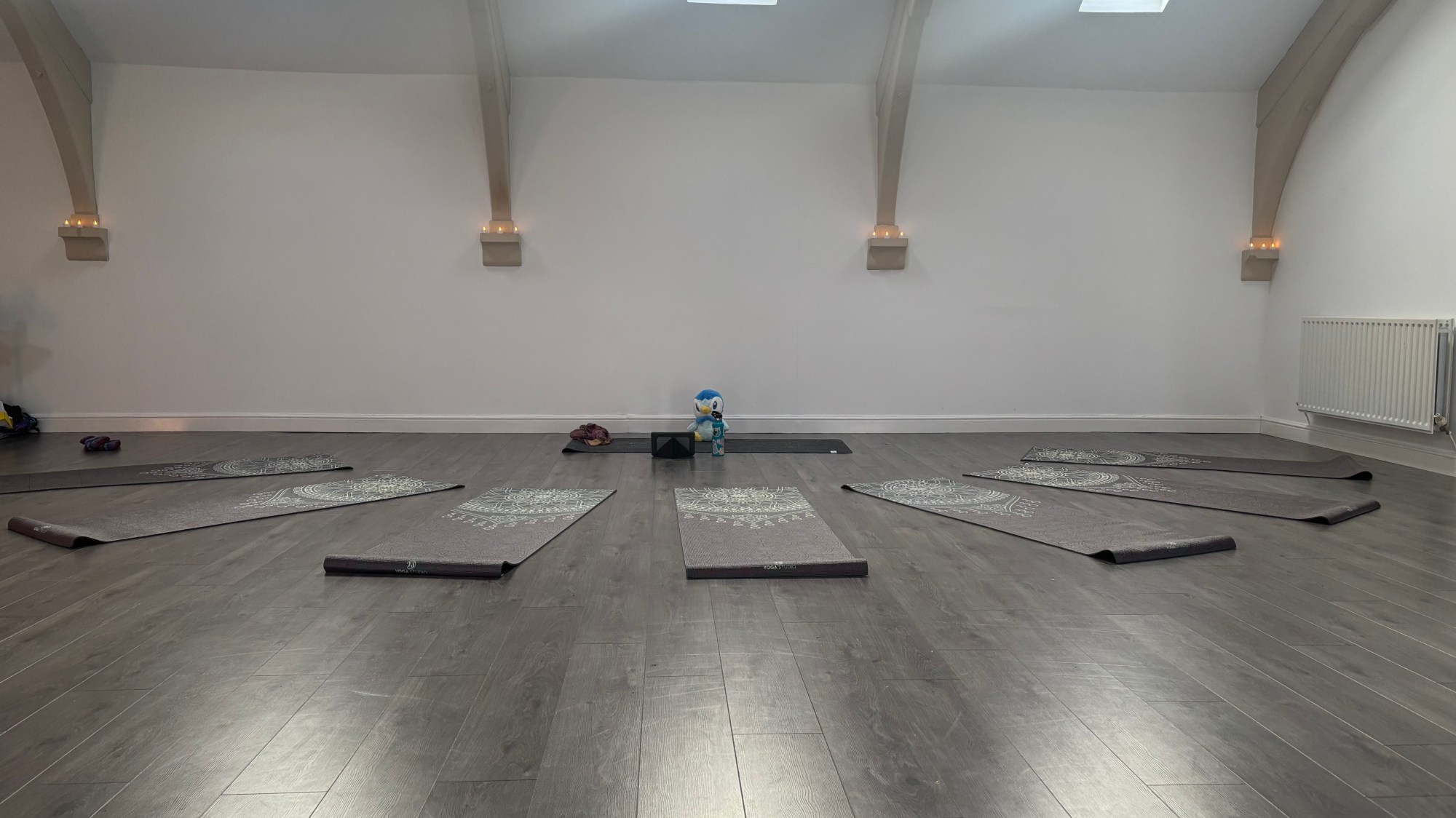
There is a belief so deeply embedded in modern life that most of us have never once questioned it. It goes something like this: rest comes after effort; rest is what you get when you’ve done enough – rest is the reward.
You’ve probably felt it: that low-level hum of guilt when you sit down before the to-do list is finished; the way a nap feels indulgent rather than necessary or just a lovely little treat; the internal justification you run before allowing yourself a quiet evening – well, I did do the laundry, and I answered all those emails, so I suppose I’ve earned it.
Earned it.
As though rest were a bonus, handed out only at the completion of certain goals by some invisible productivity manager, rather than a biological and psychological necessity. As though the body’s need to recover were conditional.
Yoga has something to say about this. Quite a lot, actually.
What The Eight Limbs Actually Teach Us
When most people think of yoga, they think of the physical postures – the āsanas. Downward dog (adho mukha śvānāsana), the warrior poses (vīrabhadrāsana I, II, and III), the satisfying click of a well-placed twist. And yes, the postures are part of it – but they are one limb of eight.
The sage Patañjali, in the Yoga Sūtras, laid out a complete framework for living – not just for moving. The eight limbs (aṣṭāṅga, literally “eight-limbed”) begin not with postures but with ethics: the yamas (observances toward the world) and niyamas (observances toward oneself); and it’s in the niyamas that we find something quietly radical.
Santoṣa. Usually translated as “contentment”, but that’s a little flat. It would be more accurate to call it sufficiency – the practice of recognising that what is, right now, is enough. Not resignation or giving up on growth or change; just the active, deliberate refusal to locate your worth – or your right to rest – somewhere always just out of reach.
This is not a passive state. Santoṣa is a practice that requires you to notice, again and again, the voice that says not yet, not quite, almost, a little more – and choose, deliberately, not to obey it.
The Body Keeps the Score. But So Does the Nervous System.
We know, from both ancient wisdom and modern neuroscience, that the body needs rest to function. Sleep is not laziness, and stillness is not stagnation. The parasympathetic nervous system – the “rest and digest” state, the counterpart to the much-discussed “fight or flight” – is not a luxury setting. It is where healing happens, where memory consolidates, and where the immune system does its quiet, essential work.
Yoga nidrā, the practice of conscious rest that I’ve written about before, sits in this space deliberately. It is not sleep, though it may feel like it; it is a guided withdrawal of the senses – pratyāhāra, the fifth limb – that allows the nervous system to genuinely downregulate. Research suggests that 30 minutes of yoga nidrā may offer the physiological restoration of several hours of sleep – although it is not a replacement for sleep. It is its own thing: a practice of being held without doing.
And yet even in yoga classes, rest is often the first thing to be apologised for, “take a rest here if you need it,” teachers say – if you need it, as though needing rest were an admission of failure rather than basic physiology. I say this as someone who has been that teacher, and who is working to unpick it.
The postures prepare the body to be still. The breathwork – prāṇāyāma – settles the mind. The stillness at the end, Śavāsana (Corpse Pose), is not the cool-down – it is the point – the integration, the moment the body absorbs everything that came before.
But, often? We rush it. We skip it. We feel guilty for needing it.
A Brief and Personal Moment
I want to share something, briefly, because I think it’s relevant – and because I know some of you will recognise it.
For a while in my life, I lived with domestic abuse. After I left, I had no financial safety net. I mean that practically: if the very stressed seam were to split on my one old pair of jeans, there were no replacement jeans. Not until there was spare money, which there frequently wasn’t. You learn, in those circumstances, a particular kind of budgeting arithmetic – not the aspirational kind from personal finance books, but the grim, tight-chested kind where you’re always one small disaster away from a problem you cannot solve.
Rest, in that time, felt completely inaccessible. Not because I wasn’t tired – I was exhausted in ways I still don’t have words for – but because stillness felt dangerous. When you’re surviving, your nervous system doesn’t believe in rest – only vigilance.
I’m not sharing this for sympathy. I’m sharing it because I know I am not the only person who has carried that wiring long after the circumstances changed; because “you deserve to rest” feels like a hollow affirmation when your body has learned, for very good reasons, that it cannot afford to let its guard down.
Yoga didn’t fix that overnight. Nothing does; but the practices – the breath, the stillness, the slow teaching of the nervous system that this moment, right now, is safe enough – those things helped. And they continue to help.
Rest, for me, became less about earning and more about learning – that I’m allowed to take up space, that my needs are not an inconvenience, and that stillness is not the same as vulnerability.
Rest as a Class Issue (Even If We Don’t Say It)
Here is something the wellness industry almost never talks about: rest is not equally available to everyone.
Restorative yoga classes, spa days, yoga retreats, eight-hour sleep schedules – these are regularly presented as self-care essentials. And they can be. But they are also, often, the preserve of people with time, money, stability, and safety. People who aren’t working three jobs and living in survival mode; people who have somewhere warm to sleep and something to eat and clothing that isn’t held together with hope and safety pins.
The women and children living in clothing poverty in this country are not resting. They are managing; surviving; and doing the impossible arithmetic of not enough, every single day.
Yoga philosophy – particularly the concept of sevā, selfless service, which runs through the tradition as an ethical imperative – asks us to take what we have cultivated in practice and bring it outward. Not in a grand, performative way, but in a quiet, consistent, human way; because a practice that only serves the practitioner is only half a practice.
Which is why, this March, the proceeds will go towards my sevā – empowering women in clothing poverty through the choice of what they choose to wear, rather than picking from a limited selection of styles & sizes. I wanted to mention it here, in this context, because the connection feels honest: rest, peace, and space as a right, not a reward. For all of us. Not just those of us who can afford a yoga mat.
So What Does This Look Like, Practically?
I’m not going to tell you that a daily yoga nidrā practice will transform your life, though it might; and I’m not going to offer you a five-step plan for guilt-free rest, because the guilt isn’t really about the rest – it’s about what you’ve learned to believe you’re worth.
What I will say is this: your body is not a machine. It doesn’t run better under continuous pressure, and it doesn’t reward self-neglect with peak performance.
The Yoga Sūtras describe the goal of practice as citta vṛtti nirodhaḥ – the settling of the fluctuations of the mind. Not the perfecting of the body, orthe maximising of output. The settling.
Settling requires stillness. Stillness requires permission. And permission, it turns out, is something you have to give yourself – not because you’ve finally done enough, but because you are enough. Right now. Almost-seam-split jeans and all.
If you’ve been waiting to rest until you’ve earned it, I’d gently suggest: that moment isn’t coming. Not because you’ll never do enough – but because rest doesn’t work that way. It’s not at the end of the to-do list; it’s woven into the practice itself.
You don’t need to earn it – you just need to take it.
You can find out more about Strong Enough to Rest here; or to book onto the March 8th event, click here. If you’re reading this after March 8th 2026, you can book your next Strong Enough to Rest session here; note you can filter on “Strong Enough to Rest” to see all of the upcoming dates.
 samdyllon.com