
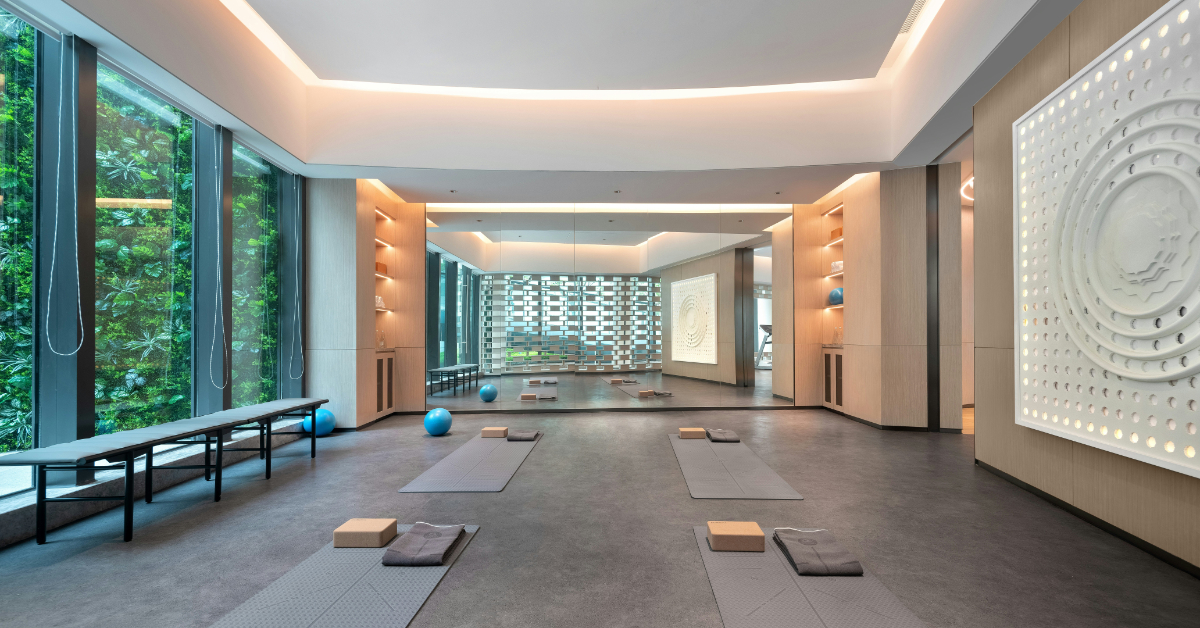
There’s something I’ve caught myself alluding to more than once this month, usually to someone lying very still on a mat while their brain runs a to-do list underneath them: this isn’t rest – it’s just your body being horizontal while your nervous system stays on duty.
August, as it turned out, became an accidental month-long study in exactly that distinction. I didn’t set out to write a month of content about rest specifically, I’d planned a fairly normal spread across breath, flexibility, meditation, the usual; but nearly everything I taught, filmed, or talked through with someone after a class or generally about yoga kept circling back to the same underlying question: what is your body actually being asked to do right now, and is it being asked kindly?
It’s a question I come back to a lot in my own practice, too, if I’m honest. I don’t think I fully believed, for a long time, that rest was something I was allowed without having first proven I deserved it, and I suspect a fair few of you reading this know that particular internal negotiation well.
Rest isn’t something you earn
Somewhere along the way, rest was recast as a reward – something you’re allowed once you’ve done enough, ticked enough off, proven yourself tired enough to deserve it. Your nervous system doesn’t actually work on that logic; it doesn’t check your to-do list before deciding whether you’re allowed to downshift – rest is a physiological state, not a prize.
And guilt-free rest tends to work faster than the negotiated kind, simply because your body isn’t spending half of it arguing with you about whether it’s earned or what you “should” be doing.
Physiologically, what we’re calling “rest” here is your parasympathetic nervous system taking the lead – the part responsible for digestion, repair, slower heart rate, the whole “rest and digest” side of things, as opposed to the sympathetic “fight or flight” mode that a demanding day tends to keep active. That handover doesn’t happen instantly, and it doesn’t happen well if part of you is still keeping score of what you haven’t finished. The negotiating itself – have I done enough to deserve this – keeps a foot in the sympathetic door, which is precisely why rest-with-guilt-attached so often doesn’t feel restful at all, even when you’ve technically stopped moving (or even slept).
If you want to test this yourself: next time you sit or lie down to rest, notice whether there’s a small voice auditing whether you’ve earned it. You don’t need to argue with it; just noticing it’s there tends to loosen its grip a little.
“Just relax” was never useful advice
If you’ve ever been told to “just relax” and found your jaw got tighter, not looser; and your shoulders somehow raise even higher than they were – that’s not you failing at relaxing; it’s your nervous system doing precisely what it’s built to do when it doesn’t feel safe enough to let go. Telling it to hurry up rarely helps, mostly because “just relax” is an instruction aimed at your conscious mind, and the part deciding whether you’re safe enough to soften isn’t run by your consciousness at all.
What does help, more often than people expect, is something as small as a physiological sigh – where we inhale normally, then add another inhale to “fill up” the lungs, then take a long exhale through the mouth; “long” meaning simply longer than your initial inhale. It’s not a trick or a mindset shift: your exhale is directly linked to your vagus nerve, which is one of the main lines of communication telling your body it’s safe to stand down. A longer exhale is, in a very literal sense, a signal your body can act on, in a way that “relax” – spoken as a word, from the outside – simply isn’t.
Try it next time you notice your jaw tightening rather than the instruction to relax on its own; if you feel little different after one, try two more. It’s a small thing, but it’s also one of the few nervous-system tools with genuinely immediate, felt effects.
Flexibility and breath, the same conversation
A few pieces of this month’s work sat closer to the body than the nervous system directly: forward folds that finally hinge from the hip instead of the lower back; shoulders that stop creeping towards your ears the moment your hips get proper support. None of it was really separate from the rest theme, a body that’s braced, moving from the wrong place, or holding its breath at a desk without noticing, is a body that hasn’t quite been given permission to soften yet either.
It’s worth saying plainly: “I’m just not a flexible person” is rarely the full picture. Your range of motion isn’t fixed the way your height is – it’s a combination of technique, how much your nervous system trusts a particular position enough to let you go further into it, as well as practice – or how often you do it (and do it well). That’s why forcing a stretch tends to backfire; you’re arguing with a protective mechanism rather than working with it. Then consistency and small technical corrections – height under the hips in a seated position, a soft-knee hinge from the hip crease rather than the lower back – tend to move things further than sheer effort ever does.
The desk-breath-holding point is smaller but connects the same way: a body that’s braced at a desk without noticing is often the same body that then struggles to fold or soften later in the day. They’re not unrelated habits.
The part of meditation nobody warns you about
If you’ve sat down to meditate and immediately started planning your shopping list – that’s not a failure of the practice; it’s just what a mind does. The actual skill isn’t achieving a blank, quiet head on command; it’s noticing you’ve drifted, and coming back, as many times as it takes. The coming-back is the practice, not evidence it isn’t working.
I still find this one genuinely difficult to remember in the moment, even after years of both practicing as well as teaching it to other people. There’s something quietly humbling about sitting down with the specific intention of being still, and finding your mind immediately less interested in stillness than in what you’re having for dinner. I’ve come to think the drifting isn’t really the obstacle to the practice – the judgement about the drifting is: a mind that wanders and returns, without commentary, is doing exactly what meditation asks of it; but a mind that wanders and then spends the next two minutes criticising itself for wandering has left the practice entirely.
If it helps: count the returns rather than resenting them. Ten returns in five minutes isn’t ten failures – it’s ten repetitions of the skill you’re actually there to build.
Where this all lands
None of this is about trying harder; if anything, it’s the opposite – most of what showed up this month pointed towards doing less, more precisely: a longer exhale instead of a harder effort to calm down, a body that’s finally supported rather than pushed, five minutes of properly withdrawing your attention instead of forcing focus, resting without first negotiating whether you’ve earned it.
If there’s a single thread running under all of it, it’s this: your nervous system generally isn’t looking for more instruction. It’s looking for evidence – the longer exhale, a moment of actual stillness, a stretch that isn’t a fight – that it’s safe enough to stop bracing. Everything this month has really been different ways of offering that evidence, rather than different ways of trying harder.
If any of this sounds somewhat familiar, there are a few ways in. Rest & Rise yoga classes run every Thursday, 7–8:15pm, at Rosehill Theatre in Whitehaven – £12 drop-in, or £40 for a block of four if you’re coming back. It’s a small room on purpose; twelve people so it never turns into something to perform in. If group classes aren’t quite what you need right now, 1:1 sessions are built entirely around whatever you’re working with, from twenty to 90 minutes, with a personal pace & intention.
Either way – no earning required first.

